Vapour-phase synthesis
Close-space sublimation and oxide-to-sulphide conversion: relating precursor chemistry and confined transport to the morphology of low-dimensional materials.
University of Cambridge · Engineering
PhD researcher in Engineering
I study how precursor chemistry and confined vapour transport shape low-dimensional materials. My work connects close-space growth experiments with Raman and photoluminescence spectroscopy, collaborative characterisation, and Python analysis.
Thesis submitted
01 / Profile
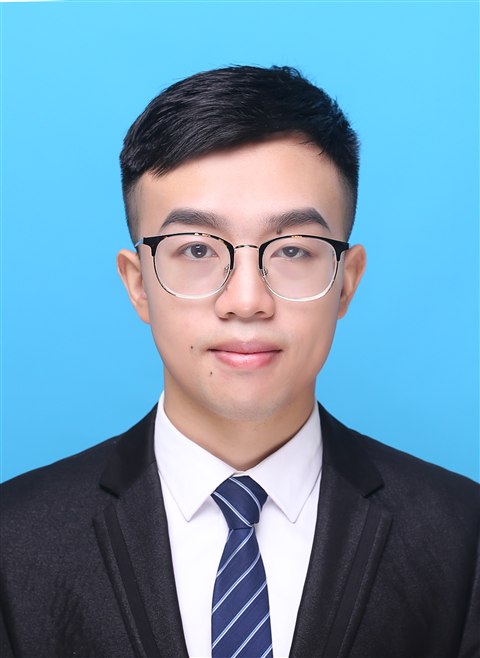
I am a PhD researcher in the Hofmann Group at Cambridge, working on tungsten oxides and transition-metal dichalcogenides. My doctoral research examines how source chemistry, source–substrate geometry and processing conditions influence material formation.
My approach combines controlled growth experiments with quantitative Raman/PL analysis and complementary evidence from collaborators. I also develop RamanPL_2D to turn spectroscopy datasets into fitted parameters, spatial maps and structured outputs.
Earlier work at Oxford connected photonic-device measurements with design and simulation. Alongside research, I have experience in technology assessment and deep-tech commercialisation.
02 / Research approach
Close-space sublimation and oxide-to-sulphide conversion: relating precursor chemistry and confined transport to the morphology of low-dimensional materials.
Raman/PL measurements and spatial mapping, interpreted alongside collaborative structural and chemical characterisation to connect processing with material response.
Python workflows for preprocessing, peak fitting, mapping and batch export of spectroscopy data, developed around experimental materials questions.
03 / Selected research
Current doctoral work, research software
and earlier photonic-device research.
Feb 2023 – Jan 2025
How does a confined vapour geometry influence oxide and sulphide nanostructure formation?
I designed and conducted CSS-facilitated CVD growth and Raman/PL measurements, and co-wrote the first-author paper with Stephan Hofmann. The study connects precursor delivery and growth conditions with material formation.
Operando SEM, TEM/EDX and XPS measurements in this study were performed by collaborators.
Jun 2025 – Apr 2026
How can source treatment and source–substrate geometry guide planar WS₂ growth?
I investigated salt-assisted close-space growth using paired source–substrate analysis and Raman/PL measurements to examine precursor evolution alongside deposition outcomes.
This work forms part of my submitted thesis; a first-author manuscript is in preparation.
Jun – Aug 2025
How can spectroscopy assess the layer structure and optical response of directly written 2D material?
I contributed Raman and photoluminescence measurements and analysis to a collaborative closed-loop crystal-layer writing study. The growth platform and complementary measurements were led by other co-authors.
The co-authored manuscript is under review.
Research software
From raw spectra to fitted parameters and spatial maps.
I developed a Python toolkit for Raman and photoluminescence preprocessing, peak fitting, spatial mapping, batch workflows and metadata-aware export.
The software provides reusable analysis workflows for experimental spectroscopy datasets.
Sep 2021 – Jun 2022
Earlier research · University of Oxford
My MEng research concerned micro-ring resonator tuning. I contributed measurements, design and simulations to the subsequent Nano Letters paper on photonic-resonance trimming.
This work connects my materials background with photonic-device analysis.
04 / Research outputs
Nanoscale 17(36), 21070–21082.
First author. Designed and conducted CSS-CVD growth and Raman/PL measurements; co-wrote the manuscript with Stephan Hofmann.
ACS Applied Nano Materials 8(15), 7608–7615.
Co-author. Raman and SEM data acquisition and analysis.
Nano Letters 23(11), 4800–4806.
Second author. Measurements, design and simulations. Associated correction: Nano Letters 24(41), 13103–13104 (2024).
Chemosphere 309, Part 1, 136547.
Co-author. Published CRediT contribution: data analysis.
Co-authored manuscript. Contribution: Raman/PL measurements and analysis.
First-author manuscript in preparation on source–transport–growth relationships. Topic description; final title to follow.
Python toolkit for Raman/PL preprocessing, peak fitting, spatial mapping, batch workflows and metadata-aware export. BSD 3-Clause License.
05 / Experience
Technology assessment, commercialisation
and university engagement.
Jun – Aug 2026
Completed the Little Angel Programme, with experience in early-stage deep-tech investment, sector research and technology assessment.
Conducted compute-in-memory chip sector research covering technical routes, value chains and application scenarios.
Jan – Apr 2026
Conducted market sizing, application analysis and competitor mapping for photonic photovoltaic technology targeting indoor solar and ambient IoT.
Supported a TRL 2-to-TRL 4 roadmap and IP licensing strategy, including MVP and scale-up considerations.
Jan 2023 – Dec 2025
Organised online and in-person career events at UK universities and identified potential research collaborators for MicroLED technology.
06 / Education
Oct 2022 – present
Thesis submitted 30 September 2026.
Close-space sublimation as a platform for accelerated process discovery in low-dimensional material growth.
Hofmann Group, Department of Engineering. Supervisor: Professor Stephan Hofmann.
Oct 2018 – Jul 2022
Trinity College. Research project on photonic micro-ring resonator tuning.
Curriculum vitae
Academic background, research contributions and publications.
Public CV updated .
07 / Contact
I welcome conversations about low-dimensional materials growth, spectroscopy, research software and related experimental collaborations.